
Casino chip security features and how to layer them
Short answer: the rules quoted here ask for results, not a list of features. Manufacturers use several security features to meet them. It helps to group them in layers by who checks them: the dealer, surveillance, the reader and the investigator.
What the rules ask for
Jurisdiction rules are covered in what regulators require on a casino chip. Michigan lets a chip either be built to prevent counterfeiting "or" carry "an embedded microchip identifying the issue and denomination of the chip" (Michigan). None of the rules quoted here names UV ink, holograms or RFID as mandatory. UV marks, serial numbers and RFID are among the tools makers use to reach the result.
Four layers, four checkers
- At the table: look and feel. Printed artwork, labels and surface finish. The dealer can check this by eye and hand.
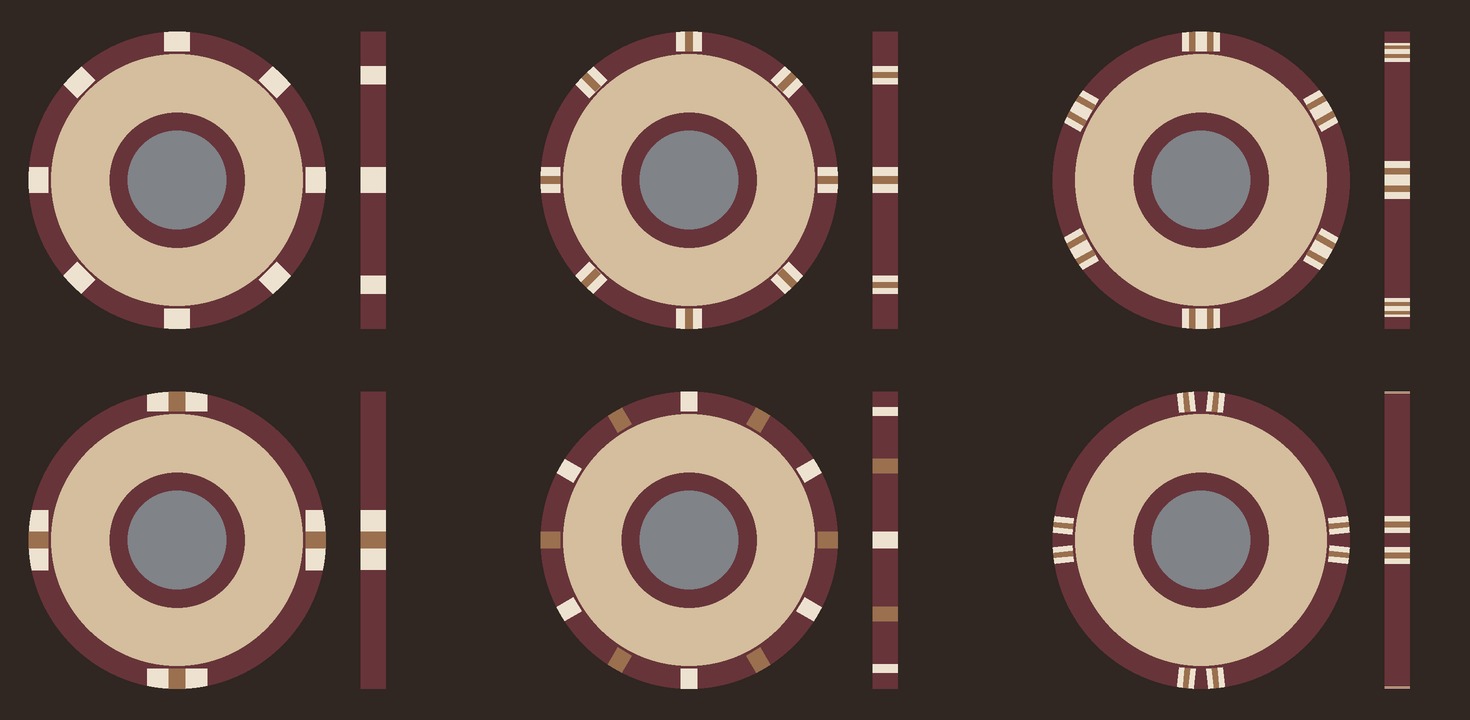
- Edge and stack. Edge spots in contrasting secondary colors are required in Michigan and Missouri. Missouri also wants a different center shape per denomination. Surveillance staff check that denominations stay distinguishable on camera, including in a stack.
- Machine-readable. Pennsylvania defines an RFID chip as one whose tag "can be used to determine the authenticity of the chip" (definitions). The table system checks this layer.
- Closer checks. Marks such as UV ink or serial numbers that staff check with a lamp or against records when a chip is in doubt.
A fake that looks right can still feel wrong, and one that passes the dealer can still fail the reader.
What happens when layers work together
In a Macau case reported by Global Gaming Business, "a dealer noticed" that a batch of high-value chips "felt unusually rough to the touch." Officials then scanned them for RFID tags, found the chips were untagged, and "knew they were counterfeit." There, feel raised the alarm and the RFID check settled it.
Security starts in the plant
Nevada also asks chip makers to keep the items used to make chips secure (Nevada Regulation). When you choose a maker, ask who has access to your molds and artwork, and whether they are ever used for anyone else. Our answer on molds: Pay for a new mold and it is yours. We never use it for anyone else. We also sign NDAs to protect your designs and data, and chips carry your logo only: see the FAQ. Check whether your jurisdiction requires a manufacturer mark before you finalize artwork (regulations).
Writing layers into your spec
Our chips
Our RFID chips work with major table systems and read 60 chips in one stack. They ship blank for enrollment on your own reader, and every chip is signal-tested before it leaves our plant: see RFID casino chips. For chips without RFID, see non-RFID casino chips.